
 VEHICLE IN THE LOOP SIMULATOR
VEHICLE IN THE LOOP SIMULATOR
Future Mobility | SAE J3016 Levels of driving automation
ADAS penetration is expected to rise significantly over the next 10 years, driven primarily by changes in NCAP’s safety rating scoring and lower cost of sensors or implementation, paving the way to Conditionally- Automated cars from 2018 (SAE Level 3) and eventually Fully-Automated Driving in more than a decade.
NCAP (New Car Assessment Program) is the government’s premier consumer information program for evaluating vehicle safety performance. The program tests vehicle performance in various crash scenarios and provides an objective rating on a 5-star scale to clearly inform consumers of a vehicle’s safety performance.
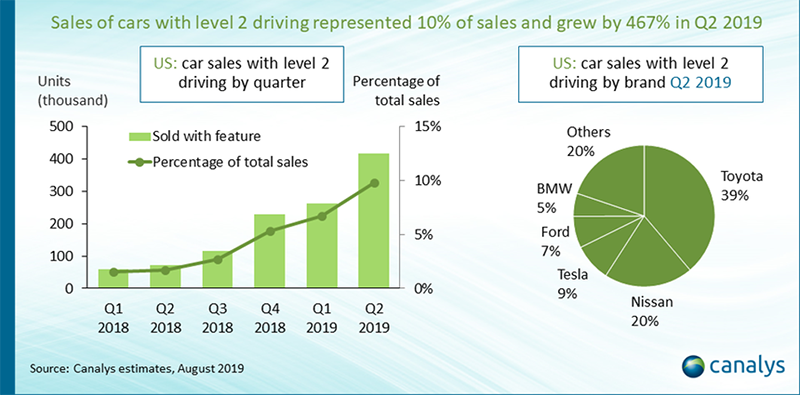
Toyota & Nissan: Most Cars Sold with L2 Capabilities
To date, Toyota and Nissan have sold and shipped the most automobiles with L2 capabilities.
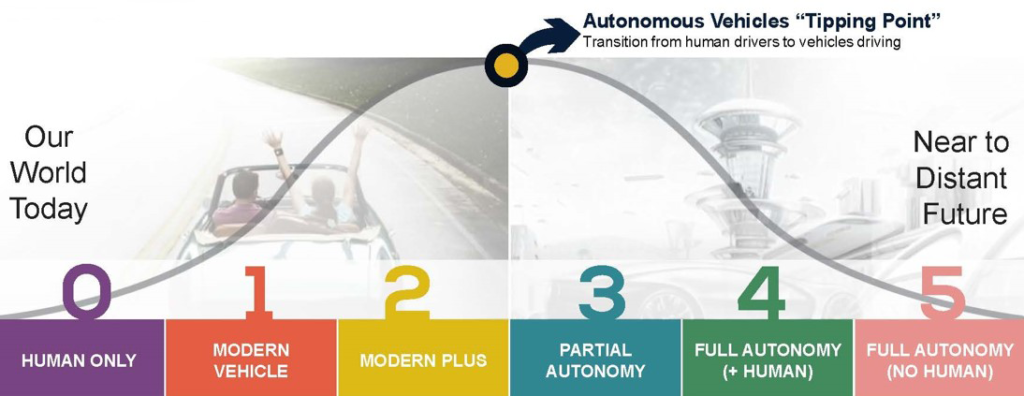
Modern ADAS/AD Vehicle Timeline
We are at the tipping point — between stage 2 and 3 (see graph below).
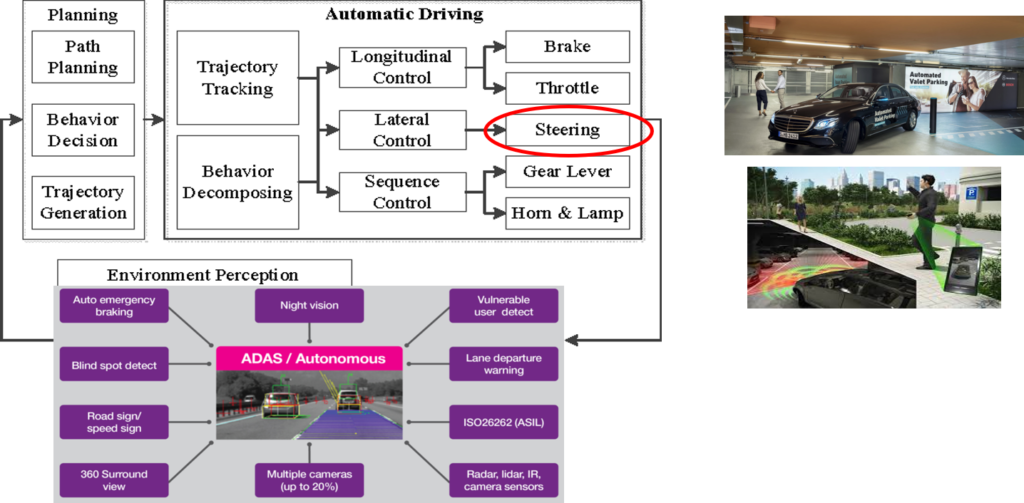
Modern ADAS/AD Vehicle Integration Challenges
Testing a complex system like a modern vehicle on a test track or on a public road involves complex and costly engineering. First of all, to be testable the vehicle must be fully or nearly-fully functional. This limits the testing opportunity to a very late stage in the development process and implies high engineering costs. Moreover, because the real-condition test is very constrained in time and space, the test coverage is not complete and only a very small variety of real-world conditions can be tested.
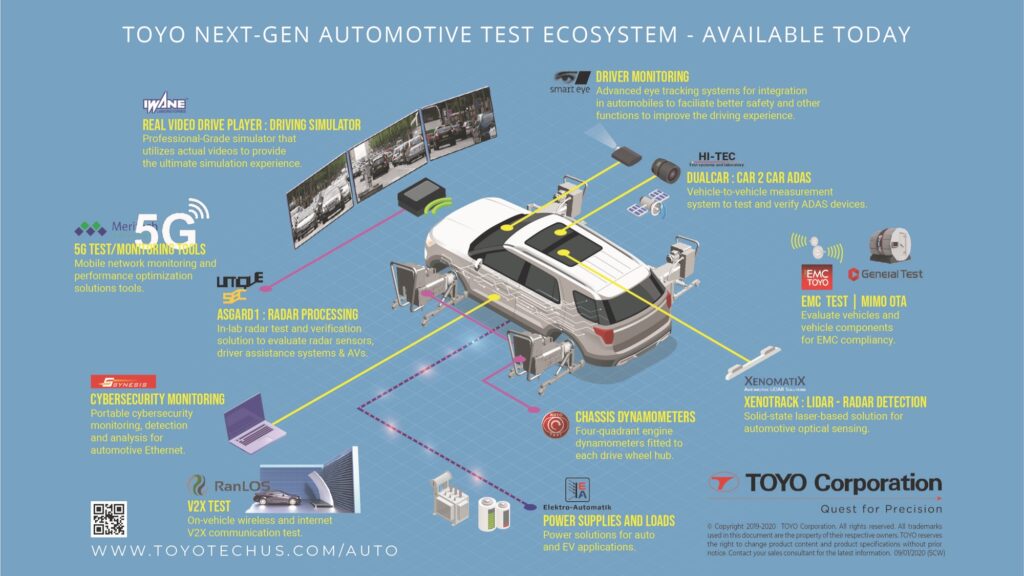
Natural Steering (TM) ViL Simulator
TOYO’s ViL Simulator with a trademarked Natural Steering capability allows you to bridge the gap between simulation and road test.
Advantages of Natural Steering VIL Simulator
- The unique steering function with TOYO VILS allows full spectrum of ADAS/AD test procedures to be achieved within a lab environment and also to be able to debug the defects associated with the steering system.
- The setup provides a repeatable test environment to determine the sensitivity of automated control strategies to specific test parameters;
- The controller performance can be systematically tested without disturbances from other systems, and dependability can be tested by controlled injection of faults;
- The tests are more secured with a controlled low inertia dynamometer environment compared to on-road;
- The results obtained can be used to refine the system specifications in an early development stage, enhancing the efficiency of the validation process;
- The use of a high dynamic dynamometer also allows simultaneous analysis of various performance indicators of the vehicle (drivability, NVH, vehicle dynamics, energy consumptions etc.).
[/vc_column_text][/vc_column]