TOYO Wins Large Contract with Major Institute Focused on Intelligent Connected Vehicle Research
To Deliver Innovative Wireless Communication Performance Measurement System for Connected Vehicles in a Deal Worth 5 Million USD

Tokyo, Japan, May 12, 2021 – TOYO Corporation announces that its Chinese subsidiary, TOYO China, received an order for a “Wireless Communication Performance Measurement System for Connected Vehicle” from the China Intelligent and Connected Vehicles (CICV) Research Institute in Beijing. The order amount is 5 million USD, with a scheduled delivery targeted for June 2022.
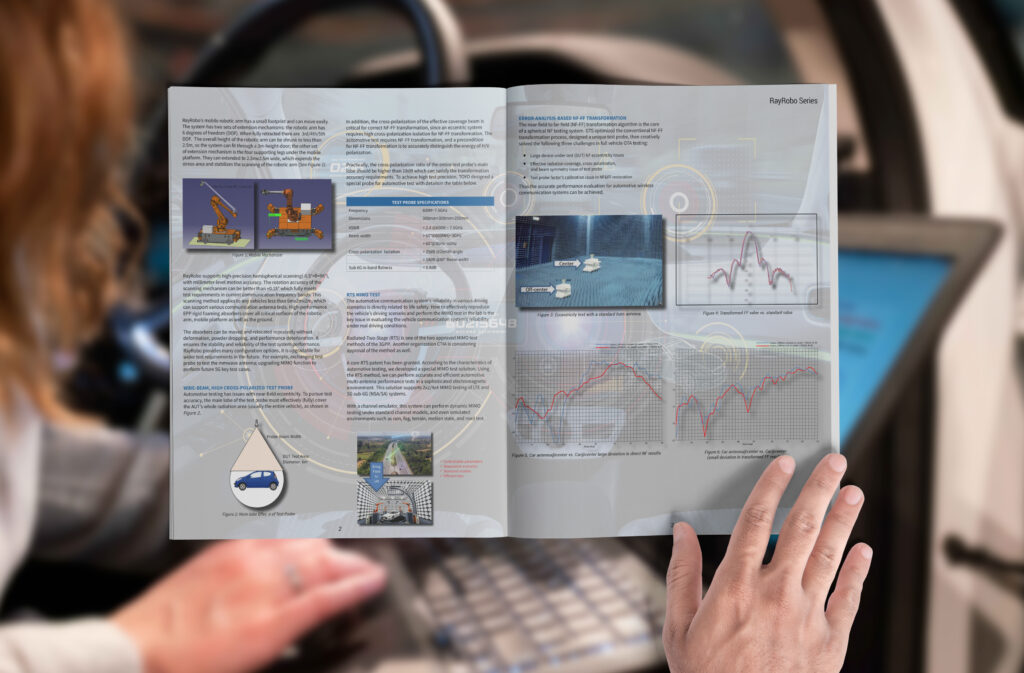
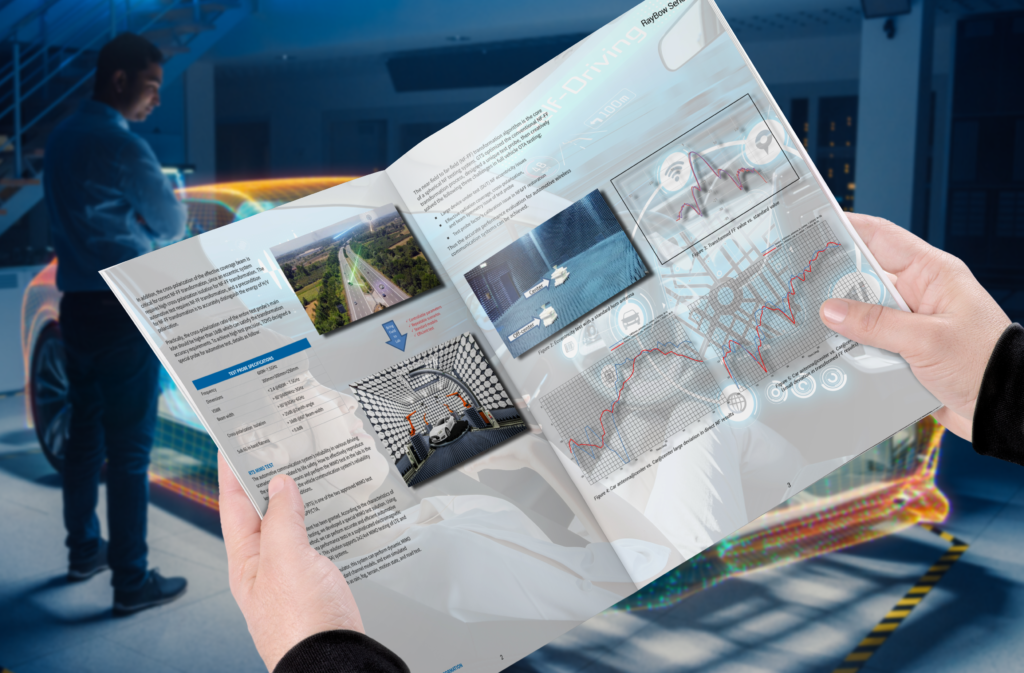
This system applies the Radiated Two-Stage (RTS) method approved under 3GPP as a test method for LTE mobile terminals and base stations to measure the in-vehicle wireless communication performance required for connected vehicles. Since its founding in December 1998, the 3GPP or Third Generation Partnership Project has been a collaboration established to develop protocols and globally agreed specifications for third-generation (3G) mobile systems.
The TOYO Wireless Communication Performance Measurement System can be augmented to support a large-scale Electro Magnetic Compatibility (EMC) anechoic chamber for automobiles. EMC refers to a device that is compatible with its electromagnetic environment and it does not emit levels of EM energy that cause electromagnetic interference in other devices in the vicinity. As a result, the TOYO Wireless Communication Performance Measurement System can support Over-The-Air (OTA) test needs in conjunction with existing EMC testing systems for in-vehicle wireless communication performance evaluation essential for the development of connected vehicles. Over-The-Air testing is a technique used to evaluate performance in a wireless communication environment.
Through a strategic partnership with CICV, a national research institute with advanced technology that leads the ICV (Intelligent Connected Vehicle) industry in China with global influence, TOYO Corporation continues to expand its business footprint not only to China, but also to the United States, and other overseas markets taking advantage of its broad EMC business field experience.
TOYO Corporation supports the development of safer vehicles by providing measurement solutions necessary for the development of advanced driver assistance systems (ADAS) and autonomous driving (AD), for both domestic and overseas markets.
New performance measurement systems required for development of highly reliable connected vehicles
As the level of autonomous driving progresses, the importance of Vehicle to Everything (V2X) to measure the wireless communication performance of vehicles by OTA is increasing to realize highly reliable advanced driver assistance systems (ADAS) and autonomous driving (AD). Vehicle to Everything is a technology that allows vehicles to communicate with moving parts of the traffic system around them or with one another. In China, there is a movement to require these evaluations as certification tests for vehicle sales, and each national laboratory is considering the introduction of a new measurement system that corresponds to these new technologies. In addition, China is promoting the adoption of cellular V2X as the main communication technology used in connected vehicles. As 5G cellular communication technology becomes popular in mobile networks, V2X, which includes 5G as one of its communication modes, is expected to become the mainstream technology of intelligent network vehicles and standard for the autonomous driving market. Conventional OTA measurement systems have limited performance in evaluating automotive vehicle systems and have not been able to meet the measurement requirements for connected car development through wireless communication.
Enabling measurement of in-vehicle wireless communication performance essential for the development of connected vehicles
The “Wireless Communication Performance Measurement System for Connected Vehicles” is a system for measuring the wireless communication performance of automobiles. It was developed by General Test Systems, one of the industry’s leading companies in the field of mobile terminals, antennas, and OTA testing. This system utilizes GTS’ Radiated Two-Stage (RTS) method patented technology and the technology has been approved by the 3GPP as a test method for LTE mobile terminals and base stations for the measurement of in-vehicle wireless communication performance for connected vehicles. Radiation performance, reception sensitivity, electromagnetic interference, multi-antenna performance evaluation, and vehicle communication performance in real-world environments are also available for evaluation.
Proposing TOYO’s new total solutions utilizing our global knowledge and experience with EMC business successes
The wireless communication performance evaluation for automobiles can be customized to accommodate existing EMC test facilities. To meet test and measurement requirements for wireless communication quality for evolving connected car development, we develop new total solutions that combine our EMC testing and wireless communication evaluation experience and leveraging TOYO Corporation’s more than 40 years of EMC experience in Japan.
Key Features
- GTS patented technology using the RTS method approved by 3GPP
- 3D MIMO test is also possible for larger test devices and objects such as automobiles. MIMO or Multiple Input Multiple Output is a wireless communication technology that transmits and receives data using multiple antennas at the same time
- Lower capital expenditure costs than conventional multi-probe test systems
- Large EMC anechoic chamber for automobiles can be scaled
- Supports multiple testing needs, such as radiation performance, reception sensitivity, electromagnetic interference, multi-antenna performance evaluation, and evaluation of vehicle communication performance in real environments
About CICV
China Intelligent and Connected Vehicles Research Institute Co., Ltd. (CICV) was established in March 2019 by three leading automotive organizations in China: China Society of Automotive Engineers (SAE), China Association of Automobile Manufacturers (CAAM), and China Industry Innovation Alliance for the Intelligent and Connected Vehicles (CAICV). Domestic and overseas OEMs, in-vehicle equipment manufacturers, and the telecommunications industry are shareholders and operators. On March 30, 2019, the CICV was approved by China’s Ministry of Industry and Information Technology (MIIT) to strengthen global competitiveness and build a world-class platform to lead China’s Intelligent Connected Vehicle (ICV) industry and improve its position in the global value chain. http://www.china-icv.cn/en/
About TOYO China
Established in 2010. Based in Shanghai and Beijing, we provide our customers with in-house developed EMC, fuel cells, batteries, liquid crystals, and information and communication systems utilizing our long-accumulated knowledge and technical capabilities. https://www.toyochina.com.cn/
About TOYO Corporation
TOYO Corporation (TSE: 8151) is a Japanese technology company headquartered in Tokyo, Japan, with subsidiaries in the United States and China. Since its founding in 1953, TOYO has become the leading distributor of advanced measurement instruments and systems in Japan. TOYO also engages in original product designs and develops advanced solutions for many of the markets that it serves, including automotive, sustainable energy, and cybersecurity industries. TOYO’s innovative products are used by many leading companies in Japan, the United States, and APAC countries, helping TOYO’s customers accelerate development, reduce time-to-market, and improve product quality. For more information, please visit the company’s website at https://www.toyo.co.jp/english.
Contact
info@toyotechus.com